Introduction
For people who love cats but struggle with sneezing, itchy eyes, congestion, or skin irritation, choosing the right breed can feel complicated. The good news is that some cats may be easier for allergy sufferers to live with than others. However, it is important to understand what “hypoallergenic” actually means before bringing a cat home.
There is no completely allergy-free cat breed. Cat allergies are mainly triggered by proteins found in saliva, skin, and other secretions. These proteins can spread onto the coat when cats groom themselves and eventually become part of household dust and dander.
Still, several breeds are commonly considered hypoallergenic cat breeds because they shed less, have distinctive coat types, or may be better tolerated by some people. Breeds such as the Siberian, Balinese, Devon Rex, Cornish Rex, and Sphynx are frequently discussed as options for allergy sufferers.
The most important point is that individual cats can affect people differently. Spending time with a specific cat before adoption is one of the most practical ways to see how your allergies respond.
What Makes a Cat Hypoallergenic?
The word “hypoallergenic” means less likely to cause an allergic reaction, not completely free of allergens. This distinction matters because cat fur itself is not usually the primary cause of cat allergies.
The major allergen associated with cats is Fel d 1, a protein produced primarily in cats’ saliva and skin glands. During grooming, saliva spreads onto the fur. When the fur sheds or the cat releases skin flakes, allergen-containing particles can become distributed throughout the home.

As a result, a cat with little or no visible fur can still trigger allergies. Sphynx cats are a good example. Although they have very little hair, they still produce allergens through their skin and saliva.
This is why hypoallergenic cat breeds should be viewed as potentially better-tolerated choices rather than guaranteed allergy-free pets.
Best Hypoallergenic Cat Breeds for Allergy Sufferers
Several breeds stand out when people research cats that may be more manageable for allergies. Their coat characteristics and grooming needs differ, so the right choice depends on both allergy sensitivity and lifestyle.
Siberian
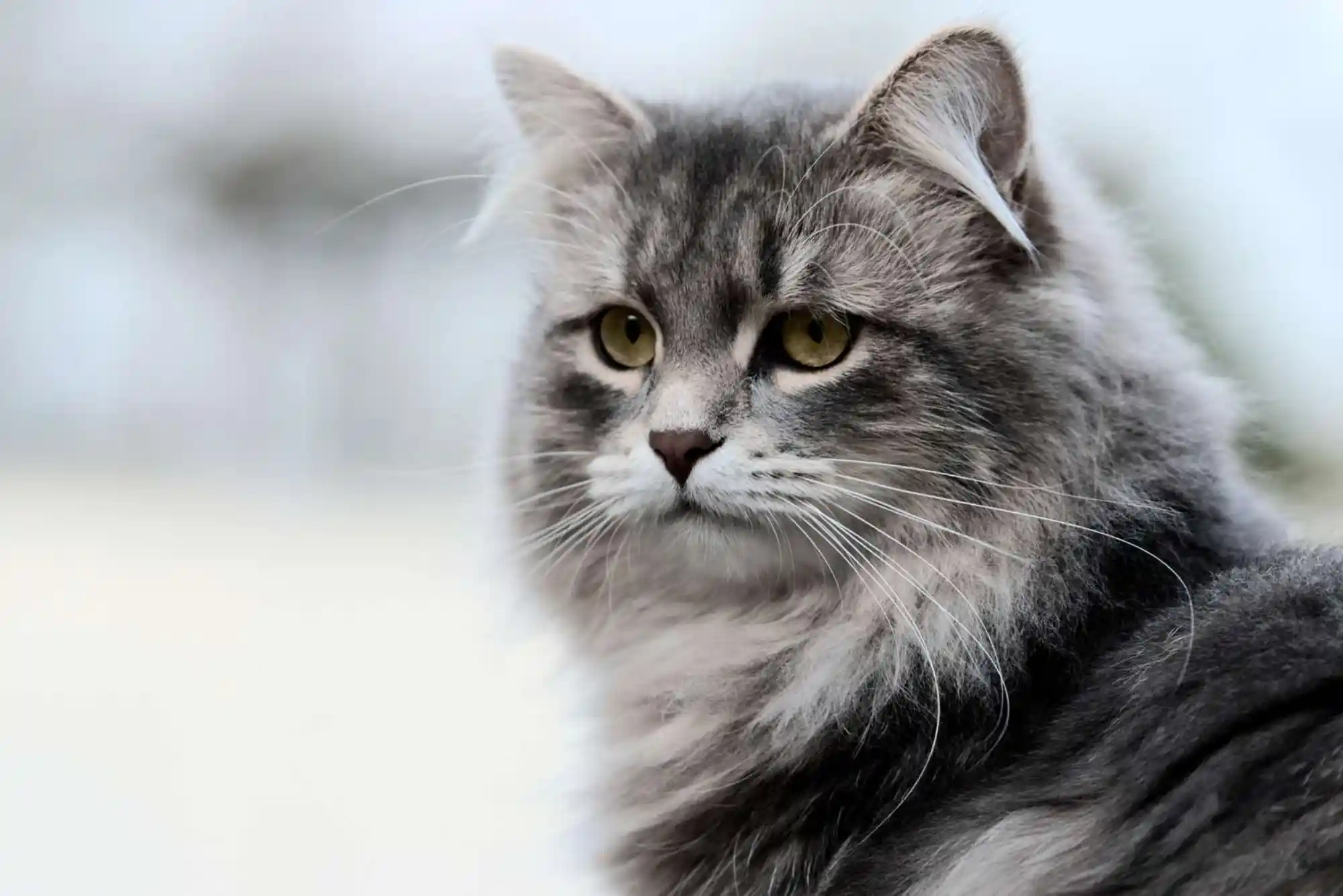
The Siberian is one of the most frequently mentioned hypoallergenic cat breeds, despite having a long, thick coat. Its reputation comes partly from reports that some individual Siberians may be better tolerated by people with allergies.
However, Siberians are not scientifically or completely allergy-free. They still produce Fel d 1, like other cats. PetMD specifically notes that no cat is truly hypoallergenic.
Siberians are also active, social, and intelligent. Their long coat requires regular grooming, so prospective owners should be comfortable maintaining a substantial amount of fur.
For someone who wants a fluffy cat and is willing to manage grooming carefully, a Siberian may be worth meeting in person before making a decision.
Balinese
The Balinese is another breed commonly included among hypoallergenic cat breeds. It has a silky, relatively fine coat and is closely related to the Siamese family.
Despite its elegant appearance, the Balinese is an active and people-oriented cat. It generally enjoys interaction and may form strong bonds with its household.
The Balinese should not be considered allergy-proof. Its inclusion on hypoallergenic breed lists means that some allergy sufferers may find its coat and shedding pattern more manageable, not that it lacks allergens.
If you are considering a Balinese, spend enough time around adult cats before adoption. Your personal response is more useful than relying on the breed name alone.
Devon Rex
The Devon Rex has a distinctive curly, wavy coat and is known for shedding less than many conventional cats. The Cat Fanciers’ Association describes its sparse, short, rexed coat and notes that Devon Rex cats shed less than most cats.
This low-shedding characteristic is one reason the Devon Rex is often discussed among hypoallergenic cat breeds. Less loose hair can mean fewer hair-covered surfaces and potentially less allergen distribution around the home.
However, the Devon Rex still produces allergens. PetMD also emphasizes that no cat breed is truly hypoallergenic.
Beyond allergies, the Devon Rex has a highly social personality. These cats often want to be involved in household activities and may not enjoy being left alone for long periods.
Cornish Rex
The Cornish Rex has a short, soft, curly coat that looks very different from the typical cat coat. Because it has relatively little fur and tends to shed less, it is frequently considered by people searching for hypoallergenic cat breeds.
The breed’s unusual coat can reduce the amount of loose hair around the home, but it does not eliminate allergens. The proteins responsible for allergic reactions are associated with skin, fur, and saliva, so a Cornish Rex can still trigger symptoms.
Cornish Rex cats are also energetic and playful. They generally need stimulation, interaction, and opportunities to exercise, making them better suited to households that can provide regular attention.
Sphynx
The Sphynx is perhaps the most famous cat associated with allergy-friendly living because it has very little visible hair. However, calling the Sphynx completely hypoallergenic is misleading.
Sphynx cats still produce allergens through their skin and saliva. In fact, because allergens can accumulate directly on the skin, some people may still experience significant reactions around them.
One advantage is that there is less traditional fur to shed throughout the home. On the other hand, Sphynx cats require special skin care because oils can accumulate on their skin. Regular cleaning and appropriate bathing may therefore become part of their routine.
If you are considering a Sphynx because of allergies, test your reaction around the actual cat before adopting.
Siamese
Siamese cats have a short, sleek coat and generally do not create the same volume of loose fur as long-haired breeds. They are therefore sometimes considered by people looking for hypoallergenic cat breeds.
Their short coat can make grooming and cleaning easier, but it does not remove the proteins responsible for cat allergies. PetMD notes that no cat is truly hypoallergenic, although some people with allergies may find short-haired, lower-shedding cats more manageable.
Siamese cats are also highly social and vocal. They tend to enjoy human interaction and can become bored without sufficient attention and enrichment.
Oriental Shorthair
The Oriental Shorthair has a sleek, short coat that requires relatively little grooming compared with long-haired breeds. Its coat characteristics make it another breed sometimes considered by allergy sufferers.
The breed is closely associated with the Siamese family and is known for being energetic, intelligent, and strongly people-oriented. PetMD notes that its short, sleek coat may make it a consideration for people with allergies, while emphasizing that no cat is genuinely hypoallergenic.
This makes the Oriental Shorthair potentially interesting for someone who wants a short-haired companion but should not be treated as an allergy-free option.
How to Choose Among Hypoallergenic Cat Breeds
Choosing between hypoallergenic cat breeds should involve more than simply looking at coat length. Your allergy sensitivity, the cat’s individual allergen production, grooming needs, and personality all matter.
Before adopting, try spending time with the exact cat you are considering. A short visit may not reveal everything, particularly if your symptoms develop several hours after exposure.
It is also useful to consider your home environment. Carpets, upholstered furniture, bedding, and curtains can collect allergen particles. A cat that sheds less may reduce the amount of loose hair, but household cleaning remains important.
If your reactions are significant, discussing cat ownership with an allergist before adoption can help you understand your personal risk and available treatment options.
Ways to Reduce Cat Allergens at Home
Even after choosing one of the commonly recommended hypoallergenic cat breeds, managing the household environment can make a major difference.
Keeping the bedroom cat-free is one practical strategy because people spend a large portion of their day there. Reducing carpets and other surfaces that collect allergens can also help. PetMD recommends measures such as HEPA air cleaners, regular cleaning, and keeping cats away from bedrooms for people dealing with pet allergies.
Regular grooming can also help control loose hair. Depending on the breed, professional grooming may be useful. However, grooming should be handled carefully if you are highly allergic because brushing can temporarily put more allergen-containing material into the air.
Wash bedding frequently and clean areas where your cat sleeps. Vacuuming with suitable filtration can help remove accumulated allergens from floors and furniture.
Hand washing after handling the cat is another simple habit. Avoid touching your eyes or face immediately after petting your cat.
Are Male or Female Cats Better for Allergy Sufferers?
There is some evidence that male cats, particularly intact males, may produce more allergens than females or neutered males. However, this should not be treated as a guarantee that a female cat will cause fewer symptoms.
Individual variation remains important. A person may react strongly to one female cat and tolerate another male cat relatively well.
For this reason, selecting a specific cat based only on sex is less reliable than testing your reaction to that individual animal.
Do Hairless Cats Help With Cat Allergies?
Hairless cats can reduce the amount of loose fur in the environment, but they do not eliminate the allergens that cause allergic reactions.
The Sphynx is the clearest example. Although it has little visible hair, it still produces allergenic proteins through its skin and saliva.
Some allergy sufferers may tolerate a Sphynx better than a heavily shedding cat, while others may not. Skin oils can also carry allergens, meaning regular hygiene is still important.
The best approach is to treat hairlessness as a coat characteristic, not as proof that the cat is hypoallergenic.
Can Allergy Sufferers Live With a Cat?
Some people with mild or moderate cat allergies can live successfully with cats by combining careful cat selection with environmental controls. However, there is no universal solution.
People with severe reactions, asthma triggered by cats, or significant respiratory symptoms should speak with a qualified healthcare professional before bringing a cat into the home.
Allergy management may involve reducing exposure, environmental controls, medications, or allergy immunotherapy depending on the individual’s circumstances. The 2026 allergen immunotherapy practice parameter update includes cat-allergic patients among those considered for cat-allergen immunotherapy under appropriate clinical care.
The goal should be to create a realistic plan rather than assuming a particular breed will completely solve the problem.
FAQs
What is the best hypoallergenic cat breed?
There is no single best breed for every allergy sufferer. Siberians, Balinese, Devon Rex, Cornish Rex, and Sphynx cats are commonly discussed as potentially better-tolerated choices, but individual reactions vary considerably.
Are there 100% hypoallergenic cats?
No. There is no completely hypoallergenic cat breed. Cats produce allergenic proteins, particularly Fel d 1, and these proteins can be present in saliva and skin secretions as well as on fur.
Are Sphynx cats good for people with allergies?
A Sphynx may be better tolerated by some people because it has very little visible hair, but it is not allergy-free. It still produces allergens through its skin and saliva, so prospective owners should spend time with a Sphynx before adoption.
Are Siberian cats really hypoallergenic?
Siberian cats are often marketed or discussed as hypoallergenic, but they are not completely allergen-free. They produce Fel d 1 like other cats. Some individual Siberians may be better tolerated by certain allergy sufferers, but this cannot be guaranteed.
Can cat allergies go away?
Cat allergy symptoms can change over time, but you should not assume that continued exposure will make an allergy disappear. If symptoms are persistent or severe, an allergist can help determine appropriate management options.
How can I reduce cat allergens in my home?
Keep the bedroom cat-free, clean regularly, wash bedding, reduce allergen-collecting surfaces where practical, and consider a HEPA air cleaner. Regular hand washing after handling the cat can also reduce accidental exposure.
Finding suitable hypoallergenic cat breeds can make cat ownership more realistic for some allergy sufferers, but no breed can guarantee an allergy-free experience. The Siberian, Balinese, Devon Rex, Cornish Rex, Sphynx, Siamese, and Oriental Shorthair may be worth considering because of their coat characteristics or lower shedding, but individual cats remain different.
Before adopting, spend meaningful time with the specific cat, consider your allergy severity, and prepare your home to reduce accumulated allergens. If your symptoms are substantial, speak with an allergist before making a long-term commitment.