Introduction
Finding urine on your carpet, bed, or furniture can be frustrating. However, if you are wondering, “Why is my cat peeing outside the litter box?” the behavior usually has an underlying cause. Your cat may be experiencing a medical problem, feeling stressed, or avoiding an uncomfortable litter box.
Cats are naturally clean animals. Therefore, sudden changes in their bathroom habits deserve attention rather than punishment. Identifying the reason can help you protect your home and improve your cat’s comfort.
This guide explains seven common causes of inappropriate urination and practical solutions. You will also learn when veterinary care is necessary and how to encourage better litter box habits.
Why Is My Cat Peeing Outside the Litter Box?
Cats may urinate outside their litter boxes because of urinary tract problems, stress, dirty litter, or environmental changes. Sometimes, the litter box itself feels uncomfortable or unsafe. In other cases, cats develop preferences for particular surfaces, such as soft bedding or carpets.
The most important step is understanding whether your cat has a medical issue or a behavioral concern. Never assume your cat is acting out deliberately.
Urinary Tract Problems
Medical conditions are among the most important reasons to investigate when your cat suddenly starts urinating outside the litter box.

Urinary tract inflammation, bladder stones, and other urinary disorders can cause discomfort. Your cat may begin associating the litter box with pain and choose another location.
Signs of Urinary Problems
Watch for frequent litter box visits, straining, crying during urination, or blood in the urine. Your cat may also lick the genital area excessively or produce unusually small amounts of urine.
A cat that strains but produces little or no urine needs emergency veterinary attention. Urinary blockages are particularly dangerous in male cats and can become life-threatening quickly.
How to Solve the Problem
Arrange a veterinary examination if your cat shows urinary symptoms or develops sudden urination changes. A veterinarian may recommend urine testing, imaging, or other diagnostic procedures.
Treatment depends on the underlying condition. Never give human medications or leftover antibiotics without veterinary guidance.
A Dirty or Uncomfortable Litter Box
Cats can be surprisingly particular about bathroom cleanliness. A litter box containing old waste or strong odors may encourage them to find another place.
Some cats also dislike covered boxes, cramped spaces, or litter that feels uncomfortable beneath their paws.
How to Make the Litter Box More Appealing
Scoop the box at least once daily, preferably more often when possible. Wash it regularly using mild, unscented soap and replace the litter as needed.
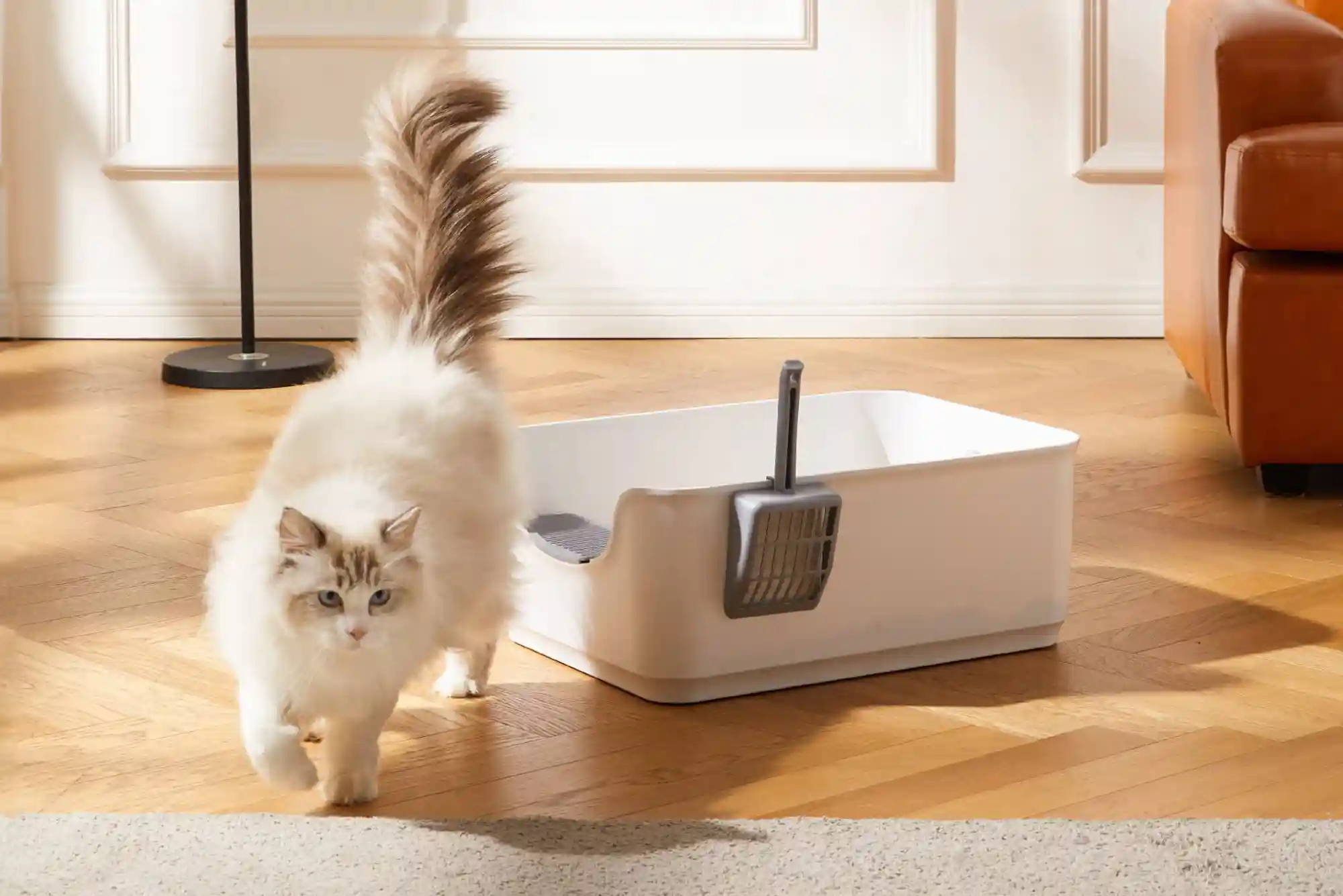
Choose a spacious box that allows your cat to turn around comfortably. Many cats prefer uncovered boxes because they offer better visibility and easier access.
Avoid strongly scented litter or deodorizing products if your cat seems sensitive to smells.
Stress and Anxiety
Stress can change a cat’s bathroom habits. Cats often feel unsettled by changes that people consider ordinary.
Moving homes, introducing a new pet, welcoming a baby, or changing daily routines may trigger anxiety. Construction noise and unfamiliar visitors can also make cats feel unsafe.
How to Reduce Stress-Related Urination
Create a quiet, predictable environment where your cat can retreat when needed. Provide hiding places, comfortable resting areas, scratching posts, and daily playtime.
Introduce new pets gradually and maintain familiar feeding and play schedules. If several cats live together, ensure each has access to essential resources without being forced to compete.
Never punish a frightened cat for urinating indoors. Punishment can increase anxiety and make the behavior more persistent.
Territorial Marking
Cats sometimes urinate to communicate territory-related information. This behavior, known as urine marking, differs from ordinary urination.
Marking often involves small amounts of urine deposited on vertical surfaces, such as walls, doors, or furniture. Your cat may stand with its tail raised and spray backward.
Unfamiliar cats outside windows, household conflict, and changes in the home can trigger marking. Cats that have not been spayed or neutered may also be more likely to mark.
How to Address Urine Marking
Clean marked areas thoroughly with an enzymatic cleaner designed for pet urine. Ordinary cleaning products may leave odors that encourage repeat marking.
If your cat is not spayed or neutered, discuss the benefits of the procedure with your veterinarian. Although it can reduce hormone-related marking, it does not resolve every case.
Reduce visual contact with unfamiliar outdoor cats when necessary. Also, provide separate resources and safe spaces for cats living together.
The Litter Box Is in the Wrong Location
Even a clean litter box can be unsuitable if its location feels frightening or inconvenient.
A box beside a noisy washing machine may discourage a nervous cat. Similarly, a box tucked into a crowded corner may leave your cat feeling trapped.
Older cats and kittens may also struggle to reach boxes located upstairs or behind closed doors.
Choose a Better Location
Place litter boxes in quiet, accessible areas where cats can enter and leave easily. Avoid locations near loud appliances, heavy foot traffic, or food and water bowls.
In multi-level homes, provide convenient access to a litter box on each floor. For households with multiple cats, the general recommendation is one box per cat, plus one extra.
Spread the boxes across suitable locations rather than placing them all together. This gives each cat more opportunities to use a comfortable, undisturbed space.
Age-Related Changes and Mobility Problems
Older cats may begin urinating outside the litter box because reaching it has become difficult. Arthritis, joint stiffness, and reduced mobility can make climbing into high-sided boxes painful.
Age-related cognitive changes may also affect bathroom routines. Some senior cats become confused, forget familiar locations, or experience changes in their daily habits.
Make Bathroom Access Easier
Choose a large litter box with a low entrance. Place it close to your cat’s favorite resting areas, especially if stairs are difficult.
Keep the route clear and avoid making your cat jump over obstacles. If your cat suddenly develops accidents, arrange a veterinary examination to identify possible pain or illness.
Never assume that inappropriate urination is simply a normal part of aging. Many underlying problems can be managed with appropriate care.
Litter Preferences and Previous Negative Experiences
Some cats strongly prefer particular litter textures. A sudden switch from unscented clay litter to a heavily scented alternative may cause them to avoid the box.
Other cats develop negative associations after experiencing pain, frightening noises, or conflict near their litter box.
Your cat may also develop a preference for soft surfaces, such as laundry, blankets, or carpets. Once that preference develops, repeated accidents can become a habit.
Find a Litter Your Cat Accepts
Offer a fine-textured, unscented litter as a starting point. If you want to change products, introduce the new litter gradually rather than replacing everything overnight.
You can also offer two boxes with different litter types to discover your cat’s preference. Keep the boxes clean and observe which one your cat uses consistently.
If your cat repeatedly chooses one location, clean it thoroughly and make the litter box more appealing. Temporarily restricting access to the soiled area may help while you address the underlying cause.
How to Clean Cat Urine and Prevent Repeat Accidents
Removing urine odor is essential when your cat repeatedly uses the same spot. Cats can detect lingering smells even when a surface appears clean.
Blot fresh urine with absorbent paper towels without rubbing it deeper into the material. Apply a suitable enzymatic cleaner according to its label instructions.
Avoid ammonia-based cleaners because their smell may resemble urine to some cats. Test cleaning products on a small, hidden area first, particularly on carpets and upholstery.
Wash washable bedding thoroughly and allow treated surfaces to dry completely. Keep your cat away from the area until it is safe and fully dry.
Most importantly, combine cleaning with the appropriate behavioral or medical solution. Removing the smell alone may not prevent future accidents.
When Should You Take Your Cat to the Vet?
Contact a veterinarian promptly if your cat suddenly starts urinating outside the litter box. A professional examination can help distinguish medical conditions from behavioral problems.
Seek emergency care if your cat repeatedly strains without producing urine, cries in pain, or appears severely distressed. Vomiting, weakness, or collapse alongside urinary symptoms also requires urgent attention.
Blood in the urine, frequent urination, excessive thirst, and repeated accidents deserve veterinary assessment. These symptoms may indicate conditions that need specific treatment.
Until the cause is identified, monitor your cat’s urination frequency, approximate urine volume, appetite, and behavior. This information can help your veterinarian assess the problem.
Frequently Asked Questions
Why Is My Cat Peeing Outside the Litter Box Suddenly?
Sudden urination changes can result from urinary tract problems, stress, dirty litter, or environmental changes. Because medical conditions may cause similar symptoms, contact your veterinarian, especially if your cat shows discomfort.
How Do I Stop My Cat From Peeing Outside the Litter Box?
Start by ruling out medical problems. Then keep the litter box clean, provide accessible locations, reduce stress, and use an enzymatic cleaner on soiled areas. Avoid punishment because it can increase anxiety.
Why Does My Cat Pee on My Bed?
Your bed may feel soft, absorbent, and familiar. Stress, urinary discomfort, or a preference for soft surfaces can contribute to this behavior. A veterinary examination and improved litter box conditions can help identify the cause.
Is My Cat Peeing Outside the Litter Box Out of Spite?
No reliable evidence suggests that cats urinate outside the box to punish their owners. The behavior more commonly reflects medical discomfort, stress, territorial marking, or dissatisfaction with the litter box.
How Many Litter Boxes Should I Have?
A common recommendation is one litter box per cat, plus one additional box. In a home with two cats, for example, three boxes provide more choice and can reduce competition.
Should I Punish My Cat for Peeing Outside the Litter Box?
No. Punishment can increase fear and stress without addressing the underlying cause. Focus instead on veterinary care, environmental improvements, and positive reinforcement when appropriate.
Conclusion
Understanding why your cat is peeing outside the litter box starts with recognizing that the behavior usually has a reason. Urinary problems, stress, dirty litter, territorial marking, unsuitable locations, aging, and litter preferences can all contribute.