Introduction
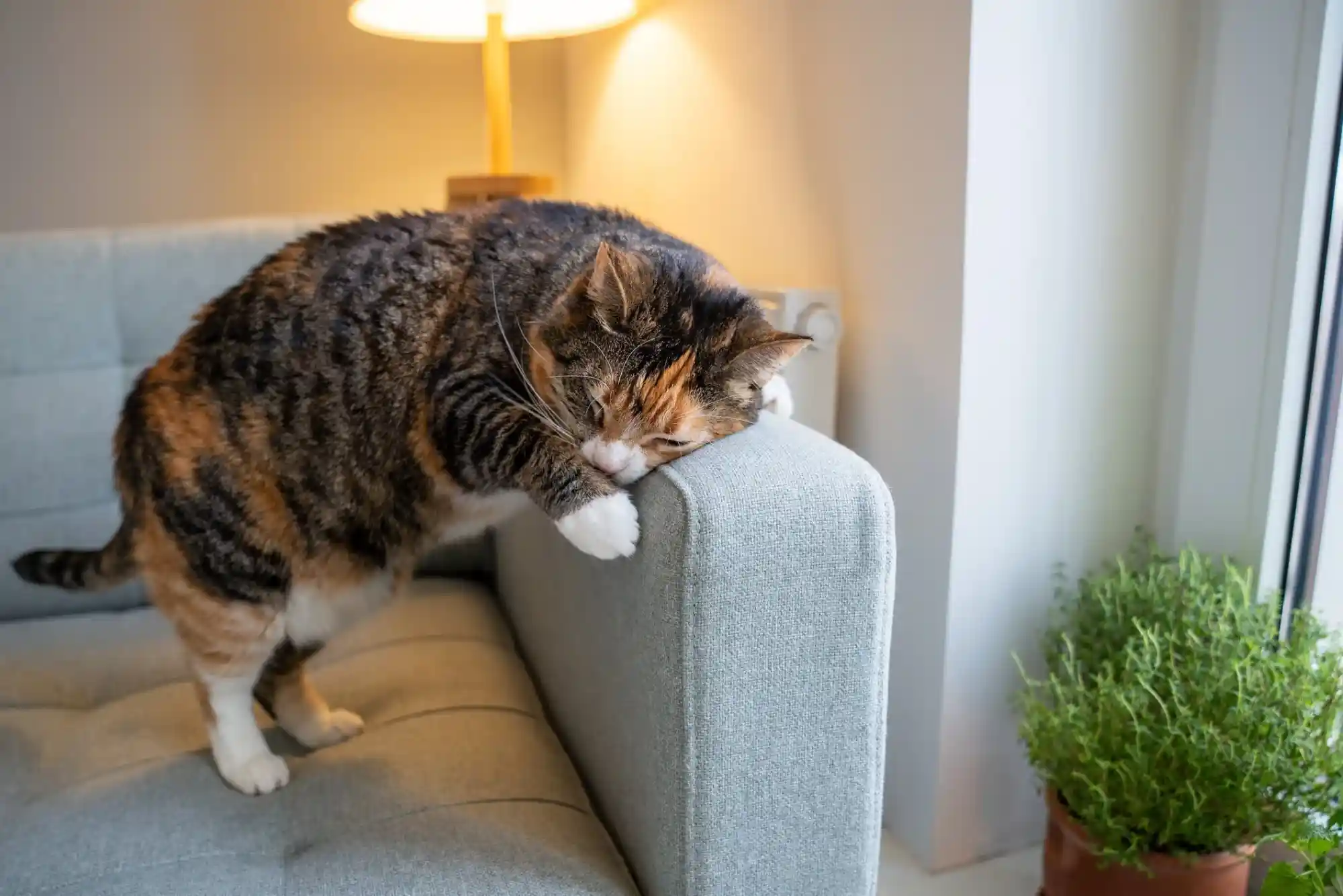
If your sofa, chairs, curtains, or wooden furniture are covered with claw marks, learning how to stop cats from scratching furniture can feel frustrating. However, scratching is not bad behaviour. It is a normal part of feline life that helps cats stretch, maintain their claws, communicate through scent and visual marks, and release energy.
The most effective solution is not to prevent scratching altogether. Instead, you need to redirect it toward surfaces your cat actually wants to use. A properly selected and positioned scratching post can make a dramatic difference, especially when you combine it with positive reinforcement and temporary furniture protection.
This guide explains how to stop cats from scratching furniture by creating a scratching-post setup that fits your cat’s natural preferences.
Why Do Cats Scratch Furniture?
Before learning how to stop cats from scratching furniture, it helps to understand why your cat has chosen the sofa or another household item.
Scratching serves several purposes. Cats use the behaviour to stretch their shoulders, legs and back, remove the worn outer layer of their claws, and leave visual and scent signals. Furniture can be particularly attractive because it is often tall, stable and located in areas where the family spends time.
The ASPCA explains that cats may scratch during play, stretching and territorial marking, while also using scratching to maintain their claws.

This is why simply saying “no” usually does not solve the problem. Your cat still has the biological need to scratch; you need to provide a more appropriate outlet.
How to Stop Cats from Scratching Furniture With the Right Post
The scratching post itself is one of the most important parts of your strategy. A beautiful post that your cat dislikes will not protect your furniture.
Choose a Stable Scratching Post
Stability matters. If a post wobbles, slides or falls over when your cat pulls against it, your cat may avoid it completely.
Look for a heavy, solid base that stays firmly on the floor. The post should also allow your cat to scratch without having to balance awkwardly.
For vertical scratching, height is especially important. The ASPCA recommends a sturdy scratching post of at least three feet high so a cat can stretch properly while scratching.
Match the Post to Your Cat’s Scratching Style
Watch what your cat does before buying several different products.
If your cat scratches the vertical side of a sofa, a tall vertical post may be the best choice. If your cat scratches carpets or rugs, a horizontal scratching pad may work better. Some cats prefer slanted surfaces.
Material also makes a difference. Sisal, cardboard, wood, carpet and upholstery provide different textures. The ASPCA recommends experimenting with different surfaces and orientations because individual cats can have strong preferences.
Don’t Assume One Post Is Enough
A common mistake is putting one scratching post in a quiet corner and expecting the cat to use it instead of the sofa.
Cats often scratch in several locations, particularly in multi-cat homes. Having appropriate scratching surfaces in important areas gives your cat more opportunities to choose the correct option.
If your cat repeatedly damages a particular chair, place a scratching post close to that chair first. Once your cat develops a reliable habit, you can gradually move the post if necessary.
Where Should You Put a Scratching Post?
Placement is one of the biggest secrets to understanding how to stop cats from scratching furniture.
Put the Post Beside the Furniture
If your cat scratches the arm of your sofa, put the scratching post immediately beside that area.
This works because you are not asking your cat to completely change its routine. You are simply offering a better surface at the location where scratching already happens.
Once your cat consistently uses the post, you can gradually move it a short distance away.
Place Scratchers Near Sleeping Areas
Many cats scratch after waking up because stretching is naturally associated with the behaviour. A scratching post near your cat’s favourite sleeping area can therefore be particularly useful.
A post near an entrance or another frequently used part of the home can also encourage appropriate scratching.
Avoid Hiding the Scratching Post
A scratching post tucked behind a door may look tidy to you, but it may be unattractive to your cat.
Scratching can serve a territorial communication function. Cats may prefer prominent areas where their scratching is visible and where they regularly interact with people.
How to Make a Scratching Post More Attractive
If your cat ignores the new post, don’t immediately assume that scratching posts don’t work.
The problem may be the setup.
Try placing a favourite toy near the post. You can also use catnip if your cat responds to it. Interactive play around the scratching area can encourage investigation.
When your cat uses the post naturally, reward the behaviour immediately with praise, attention or a small treat.
Positive reinforcement is generally more useful than punishment because the goal is to teach your cat which scratching surface is rewarding.
For additional guidance on managing scratching behaviour, you can explore these Cat Scratching Fixes for practical ideas.
How to Stop Cats from Scratching Furniture Without Punishment
Punishing a cat for scratching can create fear without teaching the behaviour you actually want.
Avoid hitting, shouting at, or physically forcing your cat to scratch a post. The ASPCA specifically warns against grabbing a cat and forcing its claws onto a scratching post because this can frighten the animal and make it avoid the post.
Instead, redirect calmly.
If you see your cat approaching the sofa, place the scratching post nearby or use a toy to attract attention toward it. When the cat scratches the appropriate surface, reinforce that choice.
The objective is simple: make the correct scratching location easier, safer and more rewarding than the furniture.
Protect Furniture While Your Cat Learns
Training takes time, so protecting the furniture during the transition can prevent further damage.
Temporary covers can make a favourite scratching area less appealing. Double-sided tape and other cat-safe physical deterrents may also discourage scratching on specific surfaces. The ASPCA recommends covering or modifying attractive furniture while placing suitable scratching alternatives nearby.
Avoid products that can injure your cat or expose them to harmful chemicals.
You can also rearrange furniture temporarily if it blocks access to a frequently targeted area. The objective is not to make the entire home unpleasant; it is to break the established habit while a new scratching habit develops.
Use Positive Reinforcement Consistently
Consistency is essential when learning how to stop cats from scratching furniture.
Imagine your cat uses the scratching post once in the morning and receives praise, but later scratches the sofa and gets yelled at. The cat may not understand the distinction you are trying to make.
Instead, reward appropriate scratching whenever you notice it.
A treat can work for food-motivated cats. Others may prefer play, affection or verbal praise. Find what your individual cat values most.
Over time, repeated positive experiences can make the scratching post a preferred destination.
Keep the Scratching Post in Good Condition
Don’t throw away a scratching post simply because it looks worn.
A shredded scratching post may look unattractive to people, but the damage can actually make it more satisfying for a cat. Scratched material provides texture and familiar scent.
The ASPCA notes that cats may prefer posts that have already been scratched because they can grip the material effectively and recognise it as a familiar scratching location.
Replace a post when it becomes genuinely unsafe or unstable rather than simply because it looks used.
Combine Scratching Posts With Nail Care
Regular nail maintenance can reduce the amount of damage caused when a cat scratches furniture.
The ASPCA recommends regular nail trimming and advises taking care not to cut into the sensitive quick. If your cat strongly resists nail trimming, a veterinarian or professional groomer can help.
Nail trimming should complement—not replace—a proper scratching setup. Your cat still needs to scratch because scratching fulfils several behavioural and physical needs.
Declawing is not an appropriate solution. The ASPCA opposes declawing and recommends behavioural alternatives such as scratching posts, pads, nail trimming and temporary claw covers.
What If Your Cat Suddenly Starts Scratching More?
A sudden change in scratching behaviour deserves attention.
Increased scratching may occur when a cat experiences changes in its environment, household routine or social situation. A new pet, visitors, moving furniture or conflict with another cat can potentially affect behaviour.
Scratching is also one way cats communicate and mark territory. If your cat suddenly becomes much more destructive, look at what has changed around the home.
If the behaviour is persistent, extreme or accompanied by other unusual signs, speak with your veterinarian or a qualified feline behaviour professional.
In some situations, veterinarian-approved Pheromone Therapy for Cats may be considered as part of a broader behaviour-management plan. Pheromone products should not be treated as a replacement for environmental changes, appropriate scratching surfaces or professional advice when needed.
Common Scratching Post Setup Mistakes
Even when owners buy a good scratching post, several simple mistakes can reduce its effectiveness.
One is choosing a post that is too short for a cat that prefers vertical scratching. Another is selecting a lightweight model that moves when the cat uses it.
Location is another frequent problem. A post hidden in a spare room may receive little attention while the sofa remains in the centre of daily family activity.
It is also a mistake to remove every scratching opportunity except one post. Cats need appropriate outlets, and preferences differ between individuals.
Finally, don’t expect instant results. Your cat may need repeated positive experiences before the new surface becomes part of its routine.
A Practical Scratching Post Routine
A successful setup does not have to be complicated.
Start by identifying exactly where and how your cat currently scratches. If the cat attacks the sofa vertically, choose a stable vertical post and position it directly beside the targeted area.
Encourage exploration with a toy or catnip if appropriate. When the cat uses the post, reward the behaviour. Keep the furniture temporarily protected so the old scratching location becomes less attractive.
Once the cat reliably uses the post, you can experiment with moving it slightly. If scratching returns to the furniture, move the post back and reinforce the preferred behaviour again.
For households with multiple cats, provide enough scratching resources to reduce competition. The ASPCA recommends distributing resources such as scratching posts when cats live together.
For more general pet-care information, visit Mydairy.
How Long Does It Take to Stop Furniture Scratching?
There is no universal timeline because cats learn at different speeds.
Some cats switch to a new scratching surface quickly when the post is placed directly beside their favourite furniture. Others need several weeks of consistent reinforcement.
The important thing is to measure progress realistically. Your first goal is not necessarily zero scratching on furniture. It may be reducing the frequency and increasing the amount of scratching directed toward the post.
As the preferred habit becomes stronger, furniture damage should gradually decrease.
Make the Scratching Post Better Than the Sofa
Learning how to stop cats from scratching furniture is really about understanding and redirecting a natural behaviour. Your cat does not need to stop scratching; it needs an attractive, stable and appropriately positioned place to scratch.
Choose a post that matches your cat’s preferred height, texture and direction. Put it close to the furniture being damaged, reward appropriate use, protect vulnerable surfaces temporarily and remain consistent.
With the right setup and patience, you can protect your furniture while allowing your cat to express completely normal feline behaviour.
FAQs
How do I stop my cat from scratching the furniture?
The best approach is to redirect scratching rather than eliminate it. Place a sturdy scratching post close to the furniture your cat targets, choose a surface and orientation your cat likes, protect the furniture temporarily, and reward your cat whenever it uses the appropriate scratching area.
Why is my cat scratching the furniture instead of the scratching post?
Your scratching post may be too short, unstable, poorly positioned or covered with a texture your cat dislikes. Try matching the post to the furniture your cat currently scratches. For example, a cat that prefers vertical upholstery may respond better to a tall, stable vertical post than a small horizontal cardboard pad.
How do I get my cat to use a scratching post?
Place the post near an existing scratching location and make it interesting with toys, catnip or rewards when appropriate. Never force your cat’s paws onto the post. Allow the cat to investigate and reward voluntary use.
What is the best scratching post for cats?
There is no single best design for every cat. A good scratching post should be stable and appropriately sized, while its material and orientation should match your cat’s individual preference. Many cats benefit from tall vertical posts, while others prefer horizontal cardboard or similar scratchers.
Should I punish my cat for scratching furniture?
No. Physical punishment and frightening corrections can increase fear and do not teach your cat where scratching is appropriate. Calm redirection and positive reinforcement are better approaches.
Does catnip help cats use scratching posts?
Catnip can encourage some cats to investigate a scratching post, although not every cat responds to it. You can also try toys, treats or interactive play to make the scratching area more appealing.
Should I declaw my cat to stop furniture damage?
No. Declawing is a permanent surgical procedure and is not recommended as a behavioural solution. Appropriate scratching posts, regular nail care, environmental management and behaviour modification are safer alternatives.