Introduction
Indoor cats enjoy comfortable lives, but they can become bored without enough physical activity and mental stimulation. Unlike outdoor cats, they have fewer opportunities to chase insects, explore new environments, and hunt for prey. Therefore, choosing the Best Interactive Cat Toys for Bored Indoor Cats (Lasers, Feathers, Mice) can help make everyday life more engaging.
Interactive toys encourage cats to stalk, chase, pounce, and investigate. These activities support natural hunting instincts while providing healthy exercise. They can also strengthen the bond between cats and their owners.
Laser pointers, feather wands, and toy mice each offer different benefits. However, the right choice depends on your cat’s personality, age, activity level, and play preferences. Understanding these differences makes it easier to create an enjoyable indoor environment.
Why Indoor Cats Need Interactive Toys
Cats are natural hunters, even when they live entirely indoors. Their instincts encourage them to observe movement, follow interesting objects, and practice catching prey. Without suitable outlets, some cats may become restless or develop unwanted behaviors.
Interactive toys provide opportunities to express these natural instincts safely. Regular play can help maintain mobility, encourage movement, and reduce boredom. It also gives indoor cats something interesting to anticipate throughout the day.
Boredom may appear in different ways. Some cats repeatedly scratch furniture, while others demand attention, vocalize excessively, or become unusually inactive. These behaviors can have other causes, so persistent changes deserve veterinary attention.

The best interactive cat toys make play rewarding rather than frustrating. Toys should match your cat’s interests and provide opportunities to complete a satisfying hunting sequence.
Best Interactive Cat Toys for Bored Indoor Cats: Laser Toys
Laser toys are popular because they turn ordinary floor space into an exciting chasing game. A small moving light can encourage even a relaxed cat to run, jump, and change direction.
How Laser Toys Keep Cats Active
A laser’s unpredictable movement resembles the quick changes associated with escaping prey. Moving the light around corners or across open floor space encourages cats to follow it. Short sessions can provide physical activity without requiring complicated equipment.
However, laser play has one important limitation. Cats cannot physically catch a beam of light, which may leave some animals frustrated. This is why laser toys should be used thoughtfully.
Safe Ways to Use Laser Pointers
Choose a pet-safe laser toy and never point its beam toward your cat’s eyes. Avoid directing the light toward stairs, slippery surfaces, or high furniture. Sudden jumps and sharp turns can cause injuries, particularly in older cats.
Move the beam like realistic prey rather than making your cat sprint continuously. Allow pauses so your cat can watch, stalk, and prepare to pounce.
Most importantly, finish the session by directing your cat toward a tangible toy or treat. Letting your cat catch a physical object provides a more satisfying conclusion. Avoid using laser pointers exclusively if your cat becomes agitated or obsessively searches for the light afterward.
Feather Wand Toys for Natural Hunting Behavior
Feather wands are excellent choices for cats that enjoy stalking and pouncing. They allow owners to control the movement while encouraging cats to engage their hunting instincts.
Why Cats Love Feather Toys
Feathers move unpredictably when pulled across the floor or lifted into the air. These movements can resemble birds or other small prey. Consequently, feather toys often capture the attention of curious and energetic cats.
Wand toys also encourage interaction between cats and their owners. You can change the speed, direction, and height to match your cat’s abilities.
For example, a kitten might enjoy quick movements and short jumps. An older cat may prefer a feather attachment that slowly moves along the floor.
How to Make Feather Play More Engaging
Move the feather away from your cat before changing direction. This resembles prey attempting to escape and encourages stalking behavior. Occasionally hide the toy behind furniture or around a corner to build anticipation.
Allow your cat to catch the feather regularly. Repeatedly moving the toy out of reach can make play less satisfying.
Always supervise feather wand sessions. Remove loose feathers, damaged strings, and detached components that could be swallowed. Store the wand safely after play, especially if it contains long cords.
Toy Mice for Independent Indoor Play
Toy mice provide a simple way to encourage hunting behavior. They are especially useful for cats that enjoy batting, carrying, chasing, or pouncing on small objects.
Choosing the Right Toy Mouse
Look for lightweight toys made from durable, pet-safe materials. A mouse that moves easily across the floor can encourage your cat to chase it. Some toys contain crinkle material or catnip to attract additional interest.
However, not every cat responds to catnip. Some cats show little interest, while others become more playful or excited. Silvervine-infused toys may appeal to certain cats that do not respond to catnip.
Choose toys without easily detached eyes, small plastic parts, or exposed filling. Inspect them regularly for damage.
Are Toy Mice Suitable for Solo Play?
Many sturdy toy mice can provide independent entertainment when owners are busy. Scatter a few toys in different safe locations to encourage exploration.
Nevertheless, independent toys should not replace interactive play entirely. Cats benefit from opportunities to interact with people and engage in more challenging activities.
Rotate available toys every few days to maintain interest. Introducing a familiar toy after a short break can make it seem interesting again.
Comparing Lasers, Feathers, and Toy Mice
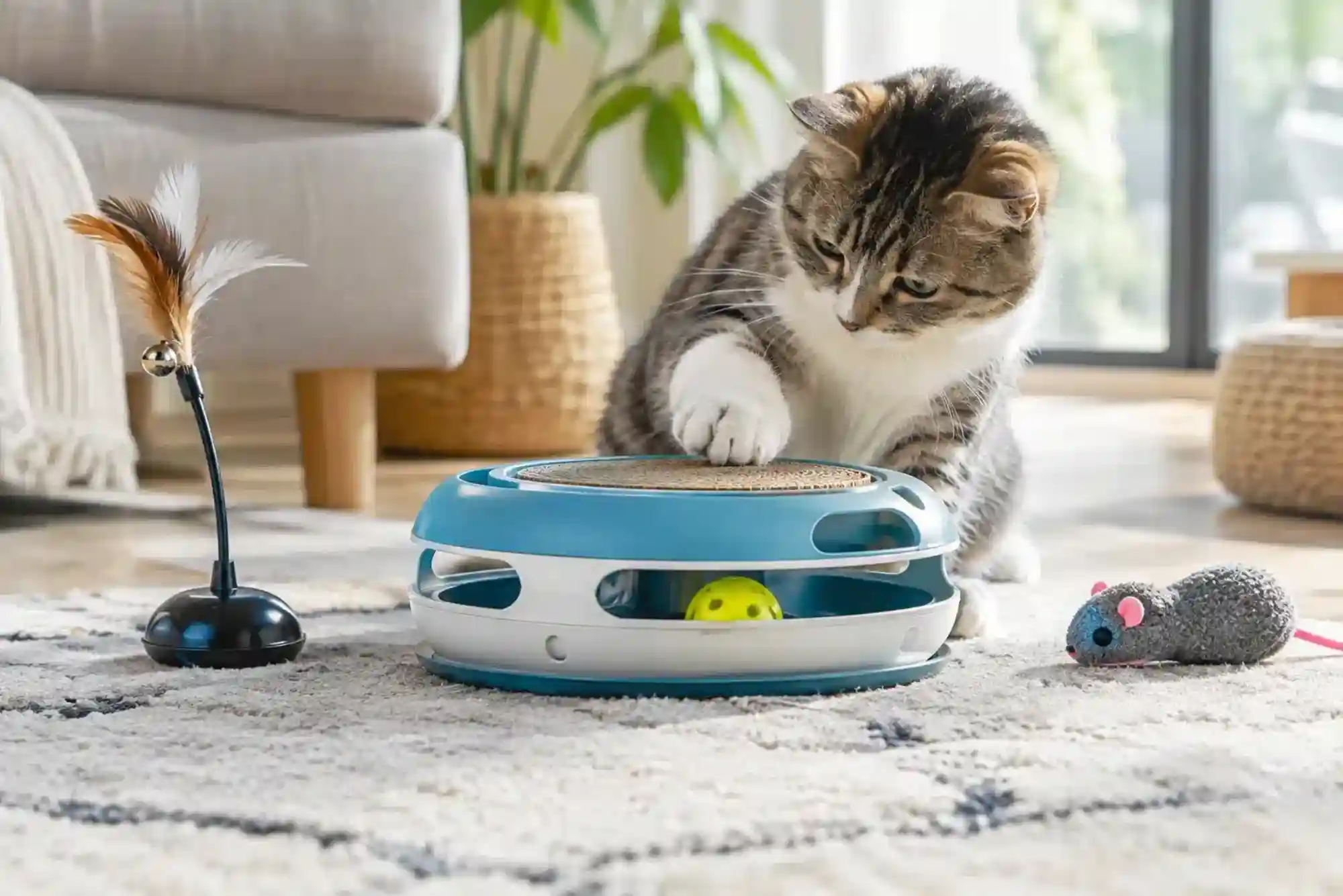
The best interactive cat toys for bored indoor cats serve different purposes. Laser toys encourage chasing, feather wands support supervised hunting games, and toy mice offer opportunities for batting and carrying.
Laser toys may suit cats that enjoy fast-moving targets. Feather wands are often ideal for cats that respond to lifelike movement and owner interaction. Toy mice work well for cats that prefer small objects they can physically catch.
Rather than choosing only one type, combine different toys when possible. This creates variety and allows you to discover which activities your cat enjoys most.
Your cat’s preferences matter more than the number of toys available. A simple feather wand may provide more enjoyment than an expensive electronic toy if your cat loves chasing feathers.
How to Choose the Best Interactive Cat Toys for Bored Indoor Cats
Start by observing your cat’s natural play style. Some cats enjoy sprinting after moving objects, while others prefer watching patiently before pouncing. Matching toys to these preferences makes play more rewarding.
Consider your cat’s age and physical condition as well. Kittens often have short bursts of intense energy. Adult cats may enjoy varied challenges, while senior cats can benefit from gentle movements that accommodate reduced mobility.
Safety should also guide your decision. Avoid toys with loose strings, sharp edges, exposed batteries, or small parts that can be swallowed. Electronic toys should have secure compartments and follow the manufacturer’s instructions.
Finally, consider how much supervision a toy requires. Feather wands and laser pointers need active supervision, while suitable toy mice may be available during independent play. Always assess the individual toy before leaving it with your cat.
Creating an Effective Indoor Cat Play Routine
Consistent play is often more helpful than occasional, lengthy sessions. Many cats enjoy several short play periods throughout the day. The ideal duration depends on your cat’s energy, age, and interest.
Try scheduling play before meals. A sequence of stalking, chasing, catching, and eating can reflect a natural hunting pattern. Finish with a small meal or an appropriate portion of your cat’s regular food.
Change the activity when your cat loses interest. Switch from a feather wand to a toy mouse rather than repeatedly waving an ineffective toy. Allow your cat to rest when breathing becomes unusually heavy or fatigue appears.
You can also make the environment more interesting by providing climbing opportunities, scratching posts, hiding places, and window perches. Puzzle feeders offer another way to encourage exploration and problem-solving.
Remember that each cat has a different personality. Some enjoy energetic games, while others prefer quiet stalking or gentle interaction. Observe your cat’s reactions and adjust the routine accordingly.
Common Mistakes to Avoid During Cat Play
One common mistake is leaving cats frustrated by toys they can never catch. This is particularly relevant to laser pointers. Including physical toys during the same session provides a more satisfying finish.
Another mistake is moving toys too quickly for older or less active cats. Excessive jumping can be uncomfortable for cats with mobility problems. Adjust the pace and consult a veterinarian if movement appears painful.
Owners sometimes leave damaged toys available for convenience. Frayed strings, loose feathers, and exposed filling can create choking or swallowing hazards. Replace unsafe toys promptly.
Finally, avoid assuming that expensive toys automatically provide better enrichment. A simple toy can be highly effective when it encourages natural behavior and receives your cat’s attention.
Frequently Asked Questions
What are the best interactive toys for indoor cats?
Feather wands, sturdy toy mice, and carefully used laser toys are popular options. The best choice depends on your cat’s hunting preferences, activity level, and age. Rotating different toys helps maintain interest.
Are laser toys safe for cats?
Laser toys can be used safely when you avoid eye exposure and hazardous jumping areas. However, cats cannot physically catch the light. End play with a tangible toy or treat to provide a rewarding finish.
How long should I play with my indoor cat each day?
Many cats benefit from several short sessions throughout the day. The appropriate amount varies with age, health, and energy level. Watch your cat’s behavior and adjust the duration accordingly.
Do indoor cats get bored without toys?
Indoor cats can become bored when their environments lack stimulation. Toys, climbing structures, scratching posts, and puzzle feeders provide opportunities for movement and exploration. Persistent behavioral changes may require veterinary advice.
Can cats play with toy mice alone?
Cats can often play independently with sturdy, undamaged toy mice. However, supervise new toys first and remove anything with loose parts or strings. Regular interactive play with an owner remains valuable.
Are feather toys better than laser pointers?
Neither option is universally better. Feather toys allow cats to catch a physical object, while lasers encourage chasing and rapid movement. Combining both thoughtfully can provide variety and more satisfying play.
Conclusion
Finding the Best Interactive Cat Toys for Bored Indoor Cats (Lasers, Feathers, Mice) means understanding what makes your cat curious, active, and happy. Laser toys encourage chasing, feather wands support interactive hunting games, and toy mice provide opportunities for independent exploration.