Introduction
Unexpected equipment failures can create significant expenses for businesses. When machinery, HVAC systems, electrical equipment, plumbing systems, or other essential assets stop working, companies may have to pay for emergency repairs, replacement parts, specialist labor, and operational downtime.
Waiting until equipment fails completely can also make relatively small problems more expensive to resolve.
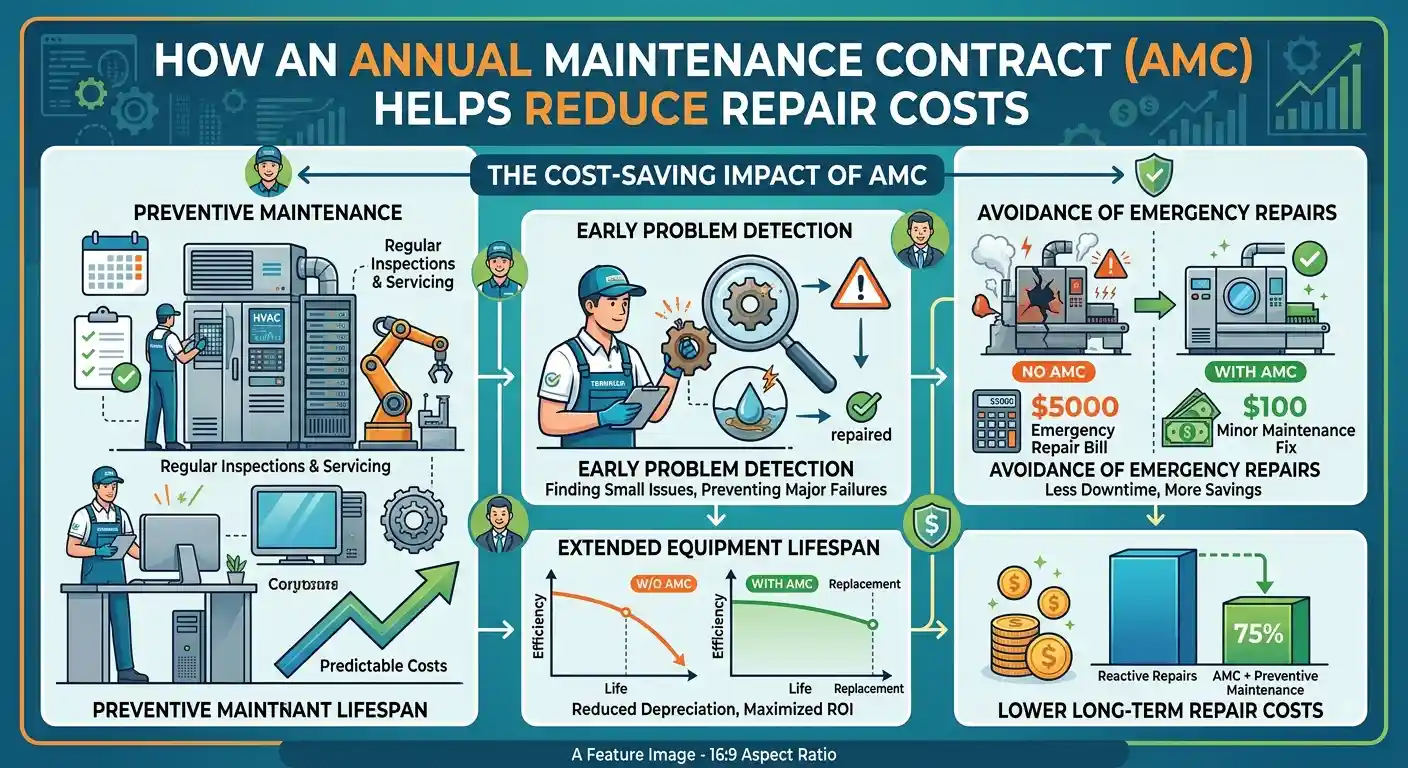
An Annual Maintenance Contract (AMC) provides a proactive approach by focusing on regular inspections, preventive maintenance, and timely repairs. By maintaining equipment throughout the year, businesses can identify potential problems earlier and potentially reduce the cost of major repairs.
Why Maintenance Costs Can Increase
Maintenance expenses often increase when businesses rely primarily on reactive repairs.
When a problem is ignored, components can continue deteriorating until the equipment experiences a major failure.
For example, a minor mechanical issue may eventually affect other components. Similarly, a small leak can cause more extensive water damage if it is not repaired promptly.

Regular maintenance helps businesses address problems before they have an opportunity to become more expensive.
What Is an Annual Maintenance Contract?
An annual maintenance contract is an agreement between a business and a professional maintenance provider for a specified period, commonly twelve months.
The contract defines the equipment covered, maintenance services, service frequency, response times, and other terms.
Depending on the agreement, an AMC may include preventive inspections, routine servicing, troubleshooting, minor repairs, and technical support.
The exact coverage varies by provider, so businesses should carefully review the contract before signing.
Preventive Maintenance Can Reduce Major Repairs
One of the main advantages of preventive maintenance is early intervention.
Technicians inspect equipment at scheduled intervals and look for signs of wear, damage, reduced performance, or other developing problems.
If an issue is identified early, it may be possible to repair or adjust the affected component before it causes a larger failure.
This can potentially reduce the need for expensive emergency repairs.
Identify Small Problems Early
Many equipment failures begin with relatively small problems.
A loose connection, unusual vibration, dirty filter, minor leak, or worn component may not immediately stop equipment from operating.
However, continuing to operate equipment with an unresolved fault can increase the risk of additional damage.
Regular AMC inspections provide opportunities to identify these problems and take corrective action.
Reduce Emergency Service Expenses
Emergency maintenance can cost more than planned maintenance.
Businesses may need technicians outside normal working hours or require urgent replacement parts and specialized support.
An AMC cannot prevent every emergency, but regular servicing can reduce some of the risks that lead to unexpected failures.
Businesses should also check whether emergency support is included in their contract or charged separately.
Extend Equipment Lifespan
Equipment replacement is often much more expensive than routine maintenance.
When assets are properly maintained, businesses may be able to keep them operational for longer.
Regular cleaning, inspection, lubrication, adjustments, and component replacement can help protect equipment from excessive wear.
An AMC creates a structured schedule for these activities and can support long-term asset management.
Reduce Downtime-Related Costs
Repair costs are only one part of the financial impact of equipment failure.
Downtime can also affect productivity, sales, customer satisfaction, and employee performance.
If critical equipment stops working, employees may be unable to complete their tasks or production may be interrupted.
Preventive maintenance can help reduce the likelihood of unexpected failures and therefore limit some of the costs associated with operational downtime.
Improve Equipment Performance
Poor equipment performance can increase operating expenses.
Equipment that is working harder than necessary may consume more energy or require more frequent repairs.
Regular maintenance allows technicians to identify conditions that may affect performance.
Cleaning, adjustments, testing, and component servicing can help equipment operate more consistently.
Make Maintenance Expenses More Predictable
An AMC can make certain maintenance expenses easier to plan.
Instead of arranging individual maintenance services whenever a problem occurs, businesses can establish an annual agreement covering specified services.
This can help managers prepare maintenance budgets more effectively.
However, businesses should account for services that are excluded from the agreement, such as major repairs, replacement equipment, or certain spare parts.
Avoid Repeated Repairs
Recurring equipment problems can become expensive over time.
If the same issue is repaired repeatedly without addressing the underlying cause, maintenance expenses can continue increasing.
Regular inspections and maintenance records allow technicians to identify recurring faults.
This information can help businesses investigate root causes and determine whether a more permanent repair or equipment replacement is appropriate.
Maintenance Records Help Control Costs
Maintenance documentation provides useful information about equipment performance and repair history.
Records can show how often an asset requires servicing, which components fail repeatedly, and how much has been spent on maintenance.
Managers can use this information to make better decisions about future maintenance budgets and asset replacement.
Professional Expertise Can Prevent Incorrect Repairs
Improper repairs can create additional problems.
When maintenance is performed by inexperienced personnel, the original fault may not be resolved correctly, potentially leading to repeated failures.
An experienced maintenance provider can use appropriate diagnostic methods and technical knowledge to identify the cause of a problem.
Professional servicing can therefore help businesses avoid unnecessary repair cycles.
Choose a Provider With the Right Expertise
The maintenance provider should have experience with the equipment and systems covered by the AMC.
Businesses should consider technician qualifications, technical experience, response times, service availability, and previous work.
A provider that understands the specific equipment is more likely to identify maintenance requirements accurately.
Review What the AMC Covers
Before signing an agreement, businesses should understand exactly what services are included.
The contract should clearly identify covered equipment, maintenance frequency, inspections, repairs, emergency support, and response times.
It should also explain exclusions and additional charges.
For example, spare parts or major repairs may not be included in the standard AMC price.
Understanding these details allows businesses to estimate the potential total maintenance cost more accurately.
Preventive Maintenance for Different Equipment
Different assets require different maintenance schedules.
HVAC systems may require filter and coil servicing, while electrical systems may require inspections and testing. Plumbing systems may need leak and drainage checks, while machinery may require lubrication and component inspections.
An effective AMC should reflect the specific maintenance requirements of each asset.
The Long-Term Financial Value of an AMC
An AMC should not be evaluated solely by its annual price.
Businesses should consider the potential financial value of preventive maintenance, including reduced emergency repairs, improved equipment performance, lower downtime risk, and longer asset life.
A slightly higher contract price may provide better value if it includes broader coverage, more experienced technicians, and faster response times.
Final Thoughts
An Annual Maintenance Contract can help businesses manage repair expenses more effectively by encouraging preventive maintenance and early problem detection.
Regular inspections, scheduled servicing, professional troubleshooting, and maintenance records can reduce the risk of major equipment failures and help businesses avoid unnecessary emergency costs.
However, the value of an AMC depends on the quality of the provider and the services included in the contract.
Businesses should compare providers carefully, review exclusions and additional charges, and select a maintenance plan that matches their equipment and operational requirements.
A well-structured maintenance agreement can help businesses protect their assets, control long-term repair expenses, and maintain more reliable operations throughout the year.
Related Reading: The Future of Electric Vehicles in Kuwait
Related Reading: Electric Stove Repair and Maintenance Dubai
Related Reading: Audi e-tron in UAE: Battery Health, Charging & Maintenance Guide
Related Reading: لماذا يُقبل الكثيرون على تجميل الأنف في دبي؟
Related Reading: Can Digital Coupons Replace Traditional Paper Coupons Entirely? — full guide
Related Reading: How to Repair Dishwasher Door Hinges